The Ultimate Guide to Scrum Mastery in Kolkata
Elevate your career trajectory with deep insights into CSM Certification Training in Kolkata, industry shifts in Eastern India, and proven strategies to drive high-performance Agile transformations.
Eastern India’s Tech Renaissance: Why Kolkata is Rapidly Embracing Scrum
Kolkata, known historically as the intellectual and cultural capital of India, is currently experiencing a massive technological renaissance. The sprawling IT corridors of Salt Lake Sector V, New Town, and Rajarhat have transformed the city into Eastern India's most critical digital hub. Major multinational IT service giants—including TCS, Cognizant, Wipro, and IBM—alongside an aggressively growing startup ecosystem, are driving this evolution. However, as these companies scale their operations to deliver complex software to global clients, they face a recurring problem: traditional, heavily documented Waterfall project management is far too slow and rigid. This realization has triggered an absolute surge in demand for Agile methodologies, making CSM Certification Training in Kolkata a highly strategic and lucrative career choice.
The globally recognized standard for executing Agile is the Scrum framework. However, simply reading about Scrum on the internet is entirely insufficient for the complex challenges posed by large-scale enterprise delivery. This is why the Scrum Alliance's Certified ScrumMaster (CSM) credential stands alone as the gold standard. To earn this certification, professionals must undergo 16 hours of rigorous, highly interactive live instruction led by a Certified Scrum Trainer (CST). During this immersive workshop, you step away from theory and learn how to practically replace top-down micromanagement with structured, empirical Sprints that guarantee continuous value delivery.
By enrolling in CSM Certification Training in Kolkata, you master the three foundational pillars of empirical process control: Transparency, Inspection, and Adaptation. You will learn how to break massive, multi-million dollar software projects into short 2-week to 4-week Sprints. For professionals looking to break into the elite tech teams operating out of Rajarhat or aiming for high-paying remote global roles, holding a CSM badge is undeniable proof that you possess the resilience, emotional intelligence, and technical leadership required to thrive in a fast-paced digital economy.
Transforming Traditional Business Mindsets in West Bengal
The corporate landscape in Kolkata is highly unique. It blends ultra-modern IT hubs with legacy industries such as manufacturing, jute, tea exports, and traditional banking. In these older sectors, a hierarchical, command-and-control "Babu" culture has existed for decades. Implementing Agile in such environments is incredibly challenging, as management is accustomed to giving strict orders rather than empowering teams. A major focus of your CSM Certification Training in Kolkata is learning how to gracefully dismantle these legacy mindsets and replace them with a culture of Servant Leadership.
A Scrum Master does not manage people; they manage the Scrum process. When you undergo this training, you learn that your true purpose is to act as a coach and a mirror for the organization. If the Developers are struggling to meet their Sprint Goal because a senior executive is bypassing the Product Owner and demanding urgent changes, the Scrum Master must intervene. You must diplomatically but firmly educate management that interrupting an active Sprint destroys empirical forecasting and reduces overall ROI.
Furthermore, you will learn how to shift the organizational focus away from tracking "busyness" (like hours logged) toward tracking actual business value. By leveraging the extreme transparency of the Sprint Review—where stakeholders can physically see and interact with working software every few weeks—the Scrum Master builds immense trust. Over time, this transparency convinces even the most traditional executives to abandon their predictive Gantt charts and fully embrace the flexibility of Scrum.
The Scrum Master in Large-Scale IT Service Delivery
A vast majority of IT professionals in Kolkata work for large-scale IT service providers and consultancies. These firms build complex software for clients sitting thousands of miles away in the US, UK, and Europe. Navigating these offshore delivery models requires highly specific Agile expertise, which is thoroughly covered during your CSM Certification Training in Kolkata.
- Agile Contracting: Traditional client contracts are often fixed-price and fixed-scope, which inevitably leads to disputes. CSMs help bridge the gap by advocating for Agile contracts where the budget is fixed, but the scope remains flexible and strictly prioritized by the Product Owner based on current market needs.
- Distributed Team Alignment: You will learn how to facilitate Scrum events (like the Daily Scrum and Sprint Planning) across multiple time zones without causing burnout. Using digital whiteboards like Miro or Mural, Scrum Masters ensure that developers in Kolkata are perfectly aligned with stakeholders in London.
- Protecting the Offshore Team: Often, offshore teams are treated as mere order-takers. A strong Scrum Master empowers the local Developers to push back on unrealistic deadlines, ensuring they only pull work into the Sprint Backlog that matches their historical velocity.
- Scaling Frameworks: In massive service providers, multiple Scrum teams often work on the same product. Your CSM foundational knowledge is the critical first step before moving into scaled environments like SAFe (Scaled Agile Framework) or LeSS.
Deep Dive into Scrum Artifacts: The Currency of Transparency
A massive benefit of the live-instruction format of CSM Certification Training in Kolkata is the deep, practical understanding you gain of the Scrum Artifacts. Scrum is built entirely upon empirical process control. If the work is not perfectly transparent, any inspections made will be flawed, leading to disastrous adaptations. Scrum guarantees this transparency through its three primary artifacts, each bound by a strict commitment to ensure quality and focus.
First is the Product Backlog. This is an emergent, perfectly ordered list of everything that is known to be needed in the product. It is the single source of work for the Scrum Team. The explicit commitment associated with the Product Backlog is the Product Goal, which provides long-term direction. A Certified Scrum Master ensures the Product Owner keeps this artifact highly visible to everyone, preventing hidden agendas and "shadow IT" projects.
Second is the Sprint Backlog. This is the plan created by and strictly for the Developers. It is a highly visible, real-time picture of the work the Developers plan to accomplish during the current Sprint. The commitment here is the Sprint Goal, which provides a single, unifying objective that keeps the team focused amidst the daily chaos of software development. If the work changes, the Sprint Backlog is updated, but the Sprint Goal remains sacred.
Finally, there is the Increment. An Increment is a concrete, usable stepping stone toward the Product Goal. Its strict commitment is the Definition of Done (DoD). If a backlog item does not fully meet the DoD (meaning it is completely coded, tested, integrated, and documented), it cannot be called an Increment, and it absolutely cannot be demonstrated at the Sprint Review. This completely eliminates the dangerous habit of developers claiming a feature is "99% done."
Agile Estimation and User Story Mapping Techniques
One of the greatest sources of anxiety for software teams in Kolkata is the intense pressure of estimation. Traditional management demands exact hourly estimates for features that have never been built before. When these predictive estimates inevitably fail, developers are unfairly blamed. CSM Certification Training in Kolkata completely overhauls this broken dynamic by teaching you the highly effective art of Agile, relative estimation.
Instead of guessing exact hours, Scrum teams use techniques like "Planning Poker" and the Fibonacci sequence (1, 2, 3, 5, 8, 13...) to assign "Story Points" to User Stories. This method estimates the *relative size* of a task compared to a known baseline, factoring in the volume of work, the technical complexity, and the inherent risk. Because human beings are psychologically much better at comparing sizes (e.g., this feature is roughly twice as complex as that feature) than guessing exact durations, Story Pointing yields highly reliable forecasts over time.
Furthermore, you will learn how to collaborate with Product Owners to write User Stories using the INVEST matrix (Independent, Negotiable, Valuable, Estimable, Small, and Testable). Rather than handing Developers a massive, rigid 200-page requirement document, you will learn how to capture the "who, what, and why" of a feature, paired with clear, testable Acceptance Criteria. This ensures the team is always building what the customer actually wants.
CSM vs. PSM vs. PMP: Making the Right Choice in West Bengal
As the demand for Agile professionals surges in West Bengal, you might find yourself weighing different certification options, primarily the Certified ScrumMaster (CSM) by Scrum Alliance, the Professional Scrum Master (PSM) by Scrum.org, and the traditional PMP. Why does the CSM remain the overwhelming favorite among HR professionals and hiring managers in Kolkata?
The core difference lies in the educational philosophy. Certifications like the PSM allow candidates to bypass formal training; you can simply read a book, pay the fee, and take an online multiple-choice test. The Scrum Alliance fundamentally rejects this approach. They recognize that a Scrum Master's role is inherently behavioral—it involves mediating conflict, coaching emotional intelligence, and facilitating complex human interactions. Therefore, CSM Certification Training in Kolkata legally mandates 16 hours of live, interactive instruction by a vetted expert (CST). Employers trust the CSM credential implicitly because it proves the candidate has engaged in practical, simulated Agile execution, not just rote memorization.
When compared to the PMP, the distinction is even clearer. The PMP is deeply rooted in predictive, sequential project management. It is excellent if you are building a bridge over the Hooghly river, where requirements don't change. However, if you are building software where requirements change daily based on user feedback, the predictive nature of PMP becomes a liability. For modern IT professionals in Kolkata, the CSM is undeniably the more relevant, highly demanded, and future-proof credential.
Step-by-Step Roadmap to Earning Your CSM Credential in Kolkata
At EasyLearningTre, we have completely optimized the certification journey to ensure that busy professionals—navigating Kolkata's traffic and demanding corporate hours—can achieve their goals over a single weekend. Here is the exact, stress-free roadmap you will follow to secure your globally recognized credential through our CSM Certification Training in Kolkata:
- Step 1 – Secure Your Seat: Review the upcoming weekend or weekday batches on our Kolkata training calendar and complete a fast, secure online enrollment from your home or office.
- Step 2 – Begin Pre-Learning: You will immediately receive access to the official Scrum Guide and proprietary EasyLearningTre study materials to help you internalize the vocabulary before the live class.
- Step 3 – The 2-Day Immersive Workshop: Log into the live virtual classroom for 16 hours of high-energy, interactive training with a globally acclaimed CST. Participate in group breakout sessions and real-world corporate simulations.
- Step 4 – Profile Activation: Once the workshop concludes, your CST will validate your attendance with the Scrum Alliance, generating a welcome email that allows you to activate your official profile.
- Step 5 – Ace the Online Exam: Take the 50-question, multiple-choice exam online at your convenience. With 60 minutes on the clock and two free attempts provided within 90 days, passing the 74% mark is highly attainable.
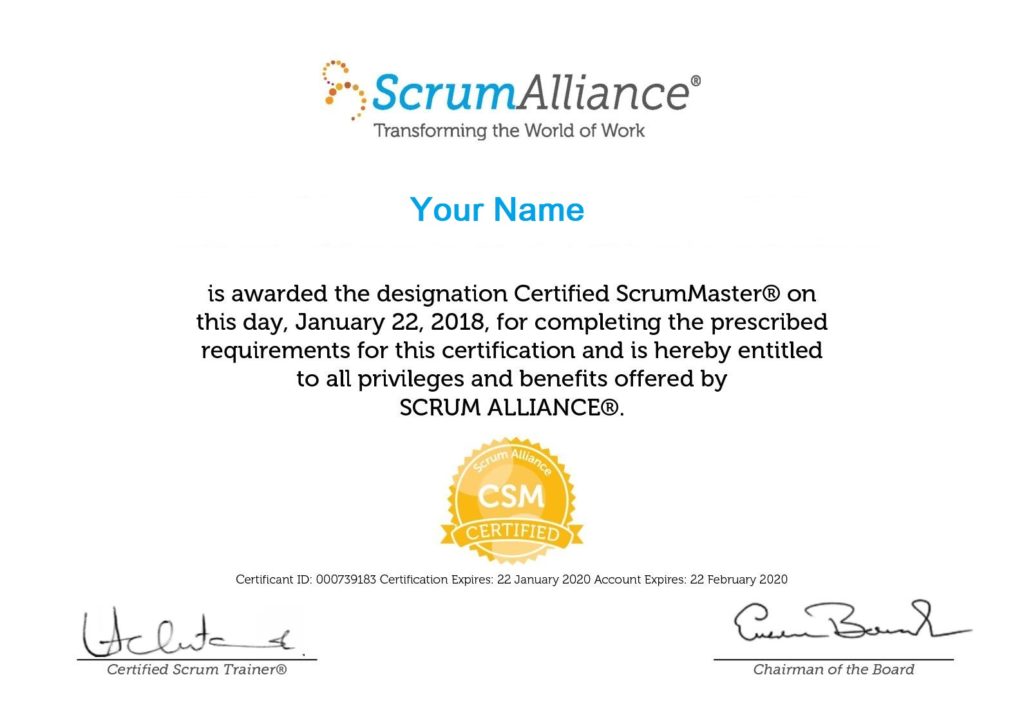
- Step 6 – Claim Your Credential: Accept the license agreement on the Scrum Alliance dashboard to instantly download your CSM certificate and secure your verifiable digital badge to showcase on LinkedIn.
Mastering the Sprint Retrospective: Fostering Innovation in High-Pressure Teams
In the fast-paced IT environment of Sector V, software development teams are incredibly susceptible to burnout. When a team operates under continuous high pressure, they often cut corners, accumulate technical debt, and lose their capacity for innovation. The most powerful tool a Scrum Master has to combat this decay is the Sprint Retrospective. During your CSM Certification Training in Kolkata, you will learn why the Retrospective is considered the most important event in the entire Scrum framework for continuous improvement (Kaizen).
The Sprint Retrospective is a dedicated, timeboxed event held at the very end of the Sprint. It is an opportunity for the Scrum Team to inspect itself—looking closely at individuals, interactions, processes, tools, and their Definition of Done. However, if not facilitated correctly, Retrospectives frequently devolve into toxic blame-sessions or useless complaint forums where nothing actually changes.
As a Certified Scrum Master, you will learn advanced facilitation techniques to ensure the Retrospective remains a space of absolute psychological safety. You will learn how to use dynamic formats like "Mad, Sad, Glad," "Start, Stop, Continue," or the "Sailboat" exercise to keep the team highly engaged. More importantly, you will ensure that the event concludes with at least one highly actionable, concrete process improvement that the team commits to implementing in the very next Sprint. This relentless dedication to improvement is what transforms an average tech team into an elite delivery unit.
Maintaining Your CSM Credential: SEUs and the Kolkata Agile Community
Your journey of learning does not stop once you pass the exam after your CSM Certification Training in Kolkata. To ensure that the global pool of Certified ScrumMasters remains active, educated, and completely up-to-date with shifting tech industry trends, the Scrum Alliance requires you to renew your credential every two years. This process is designed to be highly rewarding and focuses entirely on your continuous professional development.
To renew the certification, you must accumulate 20 Scrum Education Units (SEUs) over the two-year period and pay a nominal renewal fee via the Scrum Alliance portal. Generally, one SEU equals one hour of active learning, reading, or giving back to the Agile community. Conveniently, by completing your initial 2-day CSM Certification Training in Kolkata with EasyLearningTre, you automatically earn 20 PDUs and 20 SEUs, giving you a perfect understanding of how these continuing education credits function.
- Community Engagement: Kolkata has a growing Agile community. Earn SEUs by attending live Agile meetups in New Town or Sector V, or participating in global Scrum Alliance Regional Gatherings virtually.
- Self-Directed Study: You can earn SEUs by reading highly recommended books on Scrum, Agile coaching, or product management, and watching educational content in the Scrum Alliance resource library.
- Community Contribution: Volunteering, writing articles or blogs on Agile best practices, mentoring junior colleagues, or presenting case studies at your workplace all count towards your SEUs.
- Advancing Your Certifications: Earning a next-level Scrum Alliance credential, such as the CSPO (Certified Scrum Product Owner) or the A-CSM (Advanced Certified ScrumMaster), automatically renews your foundational CSM certification for another two years.
Acing the Scrum Master Interview at Top MNCs
Securing your CSM certification is a massive milestone, but landing a premium, high-paying role at a top Kolkata IT firm requires you to demonstrate situational intelligence during grueling interviews. Hiring managers will rarely ask you to recite textbook definitions. Instead, they will present you with complex team dysfunctions and ask how you, as a Certified ScrumMaster, would resolve them. Our CSM Certification Training in Kolkata is specifically designed to prepare you for these intense scenario-based evaluations.
During the workshop, your CST will guide you through authentic corporate case studies that mirror the exact questions asked by elite hiring managers:
- Handling Scope Creep Mid-Sprint: Formulating exact strategies on how to respectfully push back on a VP who tries to add urgent requirements into an active Sprint, and determining when a Sprint cancellation is actually justified.
- Reviving Zombie Daily Scrums: Proven, actionable techniques to transform monotonous "status update" meetings back into energized, 15-minute synchronization huddles owned entirely by the Developers.
- Coaching an Overwhelmed Product Owner: Learning how to support a Product Owner who lacks time for Backlog Refinement, which typically leads to vague User Stories and disastrous Sprint Planning sessions.
- Resolving Cross-Functional Conflict: Implementing advanced coaching frameworks to mediate severe technical disagreements between senior developers and QA testers while preserving team autonomy and psychological safety.
By mastering the strict rules of the Scrum Guide and understanding how to apply them to these complex human scenarios via CSM Certification Training in Kolkata, you graduate fully prepared to ace tough interviews and lead high-performing Agile teams from day one in India's competitive market.