The Ultimate Guide to CAPM Training Certification
Propel your career to global standards with deep insights into the CAPM Training Certification, the shift in PMBOK® methodologies, and tactical strategies to clear the PMI examination on your very first attempt.
Demystifying the CAPM: A Launchpad for Future Leaders
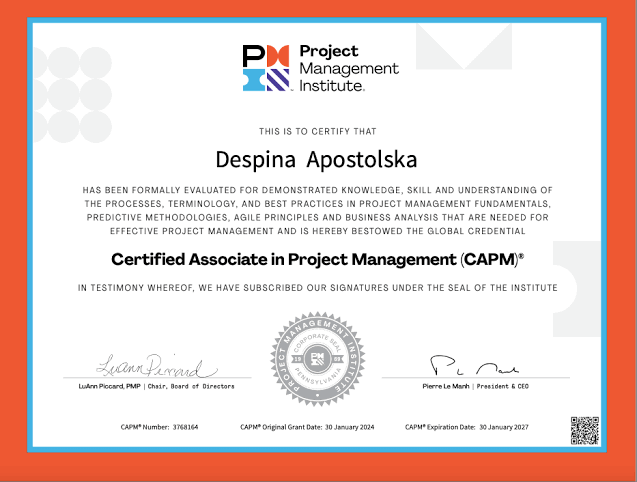
The global marketplace is shifting rapidly. With the rise of artificial intelligence, automated workflows, and complex global supply chains, the demand for highly organized, certified project professionals is currently at an all-time high. Enter the Certified Associate in Project Management (CAPM)®—a credential developed by the Project Management Institute (PMI)® specifically designed for individuals looking to validate their understanding of fundamental project management principles before they have accumulated the thousands of hours of experience required for the PMP®.
Historically, professionals assumed that project management was solely for "managers." However, in modern corporate environments, developers, business analysts, QA testers, and marketing specialists are frequently tasked with coordinating complex tasks that mirror formal projects. By pursuing your CAPM Training Certification, you acquire a distinct competitive advantage. You learn to speak the universal language of project execution. You understand terms like Critical Path, Work Breakdown Structure (WBS), and Schedule Compression, allowing you to instantly align with senior executives and stakeholders.
Unlike self-paced online courses that merely scratch the surface, a formal CAPM Training Certification provides a heavily structured, 23-hour deep dive. Guided by PMI-authorized instructors, you don't just memorize definitions; you learn the 'why' behind the processes. Why do predictive projects fail? How does Agile mitigate risk? By answering these questions, the training transforms you from a task-executor into a strategic thinker.
The Evolution: PMBOK® Guide 7th Edition & The New Exam Blueprint
For decades, project management was largely governed by rigid, step-by-step processes. The older versions of the PMBOK® Guide focused heavily on ITTOs (Inputs, Tools, Techniques, and Outputs), portraying project management as an inflexible assembly line. However, recognizing that modern projects (especially in software, finance, and marketing) require extreme adaptability, PMI fundamentally overhauled the CAPM exam blueprint and the PMBOK Guide in its 7th Edition.
The current CAPM Training Certification curriculum has moved away from process-heavy memorization to a principle-based approach. You are now evaluated on 12 core Project Management Principles, such as Stewardship, Systems Thinking, Tailoring, and Building Quality into processes. The framework is now centered around 8 Performance Domains (Stakeholders, Team, Development Approach and Lifecycle, Planning, Project Work, Delivery, Measurement, and Uncertainty).
What does this mean for a CAPM candidate? It means the exam tests your situational awareness. Instead of asking "What is the input to the Create WBS process?", the exam will present a scenario: "Your stakeholder is constantly changing requirements late in the project; which methodology and artifact should you deploy?" Our training specifically prepares you for these situational, critical-thinking questions.
Deep Dive: The Four Pillars of the CAPM Examination
The modern CAPM exam is divided into four distinct domains. A high-quality CAPM Training Certification program must cover each of these exhaustively. Let's break down exactly what you will master across these four critical areas:
Domain 1: Project Management Fundamentals (36%)
This is the foundation of your training. You will explore the different organizational structures (Matrix, Functional, Projectized) and how they impact a project manager's authority. We delve into project lifecycles, the differences between projects, programs, and portfolios, and the crucial soft skills required to lead cross-functional teams without formal authority.
Domain 2: Predictive, Plan-Based Methodologies (17%)
Commonly referred to as 'Waterfall', this methodology is still dominant in construction, defense, and regulatory sectors. You will learn how to gather exact requirements upfront, build a comprehensive schedule network diagram, perform critical path analysis, and manage the iron triangle constraints (Scope, Schedule, Cost) meticulously.
Domain 3: Agile Frameworks and Adaptive Methodologies (20%)
Because the tech world moves at breakneck speed, understanding Agile is no longer optional. This segment of the CAPM Training Certification introduces you to Scrum, Kanban, and Lean thinking. You will learn how to operate in short sprints, manage an emergent Product Backlog, and facilitate daily stand-ups to inspect and adapt constantly.
Domain 4: Business Analysis Frameworks (27%)
A major addition to the CAPM blueprint. Project managers must now act as business analysts. You will learn how to identify true business needs, elicit stakeholder requirements using facilitation techniques, build Requirements Traceability Matrices (RTM), and validate that the final product actually delivers the intended organizational value.
Navigating Hybrid Environments: The Best of Both Worlds
One of the most valuable lessons imparted during our CAPM Training Certification is the concept of 'Tailoring'. In reality, very few organizations run 100% pure Predictive or 100% pure Agile projects. Most operate in a Hybrid state. For example, a bank might use a Predictive approach to build a secure backend server infrastructure, but deploy Agile methodologies for the front-end mobile app interface to adapt to user feedback rapidly.
During the training, instructors utilize complex case studies to teach you how to blend these approaches. You will learn how to use a Work Breakdown Structure (WBS) for overarching budgeting, while utilizing User Stories and Sprint Backlogs for day-to-day execution. Understanding this duality is exactly what hiring managers at top multinational corporations (MNCs) and Global Capability Centers (GCCs) are looking for in prospective candidates.
The Step-by-Step CAPM Certification Roadmap
Achieving your credential can seem daunting. The bureaucracy of PMI applications and audits often overwhelms candidates. However, by enrolling in our CAPM Training Certification, you receive end-to-end guidance. Here is the exact roadmap to your success:
- Step 1: Check Eligibility. You only need a secondary degree (high school diploma, associate degree, or global equivalent). You do not need any prior work experience!
- Step 2: Earn the 23 Contact Hours. PMI mandates 23 hours of formal project management education. By attending our live classes, you completely fulfill this requirement. We provide a certificate that you will upload to the PMI portal.
- Step 3: Submit the Application. We guide you through the application process, ensuring your educational background and contact hours are recorded accurately to avoid unnecessary audits.
- Step 4: Examination Payment. Pay the exam fee on the PMI website. We highly recommend becoming a PMI Member first, as the discount on the exam fee offsets the cost of membership, plus you gain access to free PMBOK digital downloads!
- Step 5: Rigorous Mock Testing. Before taking the real exam, you will utilize our two full-length 150-question mock exams. This builds your stamina and exposes knowledge gaps.
- Step 6: Clear the Exam. Schedule your 3-hour exam either at a Pearson VUE center or via online proctoring from your home. Pass the test and instantly receive your digital badge!
CAPM vs. PMP: Which Path is Right For You?
A frequent question we encounter is whether a candidate should pursue the CAPM or wait until they are eligible for the PMP (Project Management Professional). The answer lies entirely in your current career stage. The PMP is the gold standard for senior project managers, but it requires a strict 36 to 60 months of documented project leadership experience. If you falsify this experience, you risk being permanently banned by PMI.
Strategic Advantage: The CAPM is your bridge to the PMP. If you are a fresh graduate or have 1-2 years of experience as a team member, the CAPM Training Certification proves your dedication and theoretical mastery. Furthermore, when you eventually reach the 36-month experience mark, holding an active CAPM certification completely waives the 35-hour training requirement for the PMP exam!
In essence, the CAPM is the ultimate tool to accelerate your journey toward senior management. It bypasses the "chicken-and-egg" problem where you cannot get a project manager job without experience, but cannot get experience without the job.
Career Trajectory: Salaries, Demand, and Real-World Application
Investing in your education via the CAPM Training Certification yields a rapid and measurable Return on Investment (ROI). The skills acquired are completely industry-agnostic. Whether you want to work in software development in Silicon Valley, heavy manufacturing in Germany, or FinTech in India, the framework remains identical.
Upon certification, candidates commonly transition into roles such as Project Coordinator, Business Analyst, PMO (Project Management Office) Specialist, and Junior Scrum Master. These roles are critical for ensuring that enterprise-level projects do not spiral out of control. Because you have formally studied risk management and schedule control, you become the right-hand person to senior PMP-certified managers, setting you up for rapid promotions.
Maintaining Your CAPM: The CCR Program
PMI requires professionals to stay updated with industry trends. Once you pass your exam after completing the CAPM Training Certification, your credential is valid for three years. To renew it, you do not need to retake the exam. Instead, you must participate in the Continuing Certification Requirements (CCR) program.
You are required to earn 15 Professional Development Units (PDUs) over the 3-year cycle. One PDU roughly equates to one hour of learning or giving back to the profession. You can earn these by attending webinars on projectmanagement.com, reading industry books, taking advanced courses (like Agile certifications), or even by practicing as a project manager in your daily job. Once you log the 15 PDUs, you simply pay the renewal fee to extend your active status for another three years.
Why EasyLearning Tre for Your CAPM Training Certification?
Not all training providers are created equal. As a leading ed-tech platform, our mission goes beyond just helping you pass a multiple-choice test. Our CAPM Training Certification is designed to build real-world competency. We utilize Authorized Training Partners and instructors who have spent decades managing multi-million-dollar portfolios. We provide continuous support, a vibrant alumni network, and a 100% money-back guarantee because we are immensely confident in our curriculum's quality.
Don't let complex projects intimidate you. Master the science of execution, elevate your resume above the competition, and step into the world of elite project management today.