The Definitive Guide to ARM Certification Training
Transition from reactive crisis management to proactive risk financing. Discover how the Associate in Risk Management (ARM) empowers professionals to shield their organizations from catastrophic physical and financial hazards.
Demystifying ARM: The Insurance and Hazard Control Standard
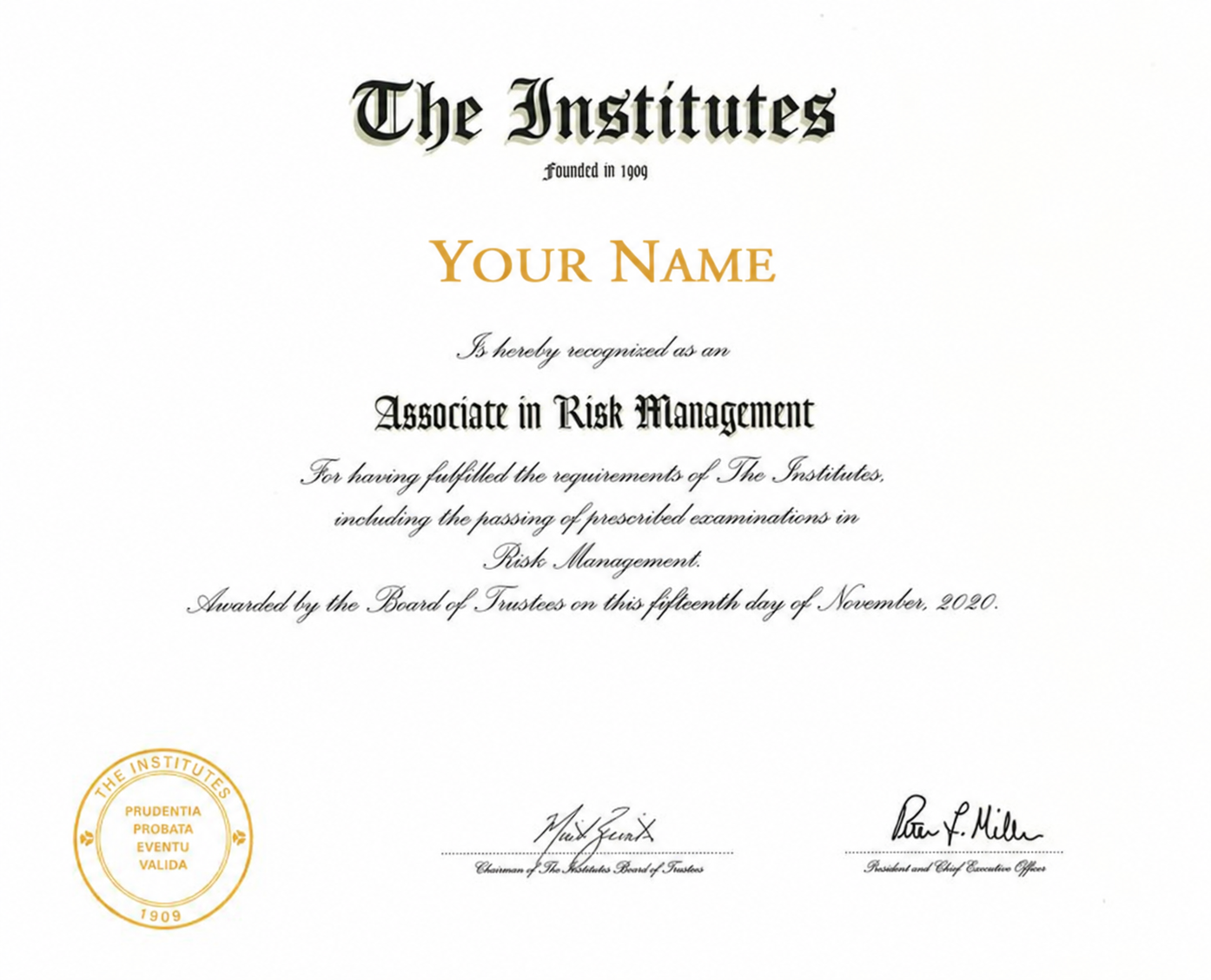
While the business world is increasingly focused on cyber threats and algorithmic trading risks, the physical and operational realities of running an enterprise remain as dangerous as ever. A factory fire, a massive product liability lawsuit, a severe worker injury, or a supply chain collapse due to a natural disaster can instantly bankrupt a company. Managing these existential threats requires a highly specialized set of skills. This is exactly where the Associate in Risk Management (ARM) designation, administered by The Institutes, proves its unparalleled value.
A frequent misconception is that risk management simply means buying insurance. In reality, purchasing insurance is the *last* step of a mature risk management process, often the most expensive one. By pursuing your ARM Certification Training, you transition from being an insurance buyer to a holistic risk architect. You learn how to identify hazards, assess their potential financial impact, implement physical safety controls to prevent them, and only then, use advanced risk financing techniques (like captives, retention pools, and complex commercial policies) to transfer the residual risk.
Attempting to pass the three rigorous ARM exams purely through self-study often leads to frustration, especially when grappling with complex legal liability and actuarial concepts. A formal ARM Certification Training program provides a highly structured, immersive experience. Guided by industry veterans—such as senior claims adjusters, underwriters, and corporate risk directors—you won't just memorize textbook definitions; you will learn how to apply them. How do you calculate the present value of a long-term worker's compensation claim? How do you negotiate a commercial property policy? Our training ensures you master this critical decision-making logic.
Anatomy of the ARM Exam: The 3 Core Modules
The ARM designation is not achieved through a single test. It requires passing three distinct exams that build upon each other, reflecting the true lifecycle of hazard control and risk financing. Let's break down exactly what you will master during your ARM Certification Training:
ARM 400: Risk in an Evolving World
This module sets the foundational framework. You will explore the holistic nature of risk management, understanding how pure risk (loss or no loss) differs from speculative risk. You will learn the entire risk management process: identifying exposures, analyzing data, and understanding how big data, telematics, and the Internet of Things (IoT) are revolutionizing how insurers price risk and how organizations prevent it.
ARM 401: Holistically Assessing Risk
How do you find the hidden dangers in your operations? This module covers the core of hazard identification and legal liability. You will learn to assess property risk, personnel risk (including worker's compensation and employee benefits), and deeply complex liability risks (torts, strict liability, product liability). Furthermore, you will explore how to analyze contracts to understand how risk is transferred legally between vendors and clients.
ARM 402: Successfully Treating Risk
Once a risk is identified, what do you do about it? This heavily weighted domain teaches you the mechanics of risk treatment. You will learn how to design physical hazard controls (like sprinkler systems or ergonomic workstations) to reduce the frequency and severity of losses. More importantly, you will master Risk Financing—learning when to retain risk (self-insurance) and when to transfer it through complex commercial insurance policies and alternative risk transfers (ARTs).
The Ethical Guidelines Requirement
Because risk managers and insurance professionals deal with massive financial transactions and sensitive claim data, The Institutes require all candidates to pass a free, online ethics module. You will study scenarios involving conflicts of interest, bad faith claims handling, and fiduciary duties to ensure you operate with the highest professional integrity.
Mastering Risk Financing: Beyond Basic Insurance
One of the most valuable lessons imparted during our ARM Certification Training is the concept of Risk Financing optimization. A common failure in traditional businesses is "trading dollars with insurance companies"—paying massive premiums for small, highly predictable losses (like minor vehicle fender benders) that the company could easily pay out of pocket.
An ARM professional understands that insurance is designed for high-severity, low-frequency events. During the training, you will utilize complex case studies to learn how to design retention limits. You will explore the mechanics of Captive Insurance Companies (creating your own insurance company to cover your corporate risks), Risk Retention Groups (RRGs), and large deductible plans. By mastering these financial mechanics, an ARM professional can literally save their organization millions of dollars annually in unnecessary premium payments.
Your Blueprint to Becoming an ARM Certified Professional
Earning the ARM credential requires dedication to mastering three massive volumes of material. Our ARM Certification Training removes the confusion and provides a clear, step-by-step roadmap to your success:
- Step 1: Understand the Structure. There are no prerequisites to start the ARM. You simply need to commit to passing the three core exams (400, 401, 402) and the ethics module.
- Step 2: Engage in Formal Training. Attend our comprehensive live workshops. We decode the dense course materials from The Institutes into practical, real-world insurance and safety scenarios.
- Step 3: Register Strategically. Create your account with The Institutes and purchase your testing windows. We recommend taking the exams sequentially as the knowledge builds upon itself.
- Step 4: Master the Testing Logic. Utilize our advanced simulation exams. The Institutes' questions often require you to apply concepts to highly specific business scenarios. Our mock tests train your brain to spot the correct application of risk theory.
- Step 5: Conquer the Exams. Sit for each exam at a Prometric testing center or via online proctoring. Pass all three to officially claim your ARM title.
ARM vs. CPCU vs. RIMS-CRMP: Decoding the Designations
Professionals frequently struggle to choose between the top risk and insurance certifications. Understanding the distinction is vital for your career trajectory.
Strategic Breakdown: If your goal is to be a master of insurance policies, underwriting, and the deep technicalities of the insurance industry itself, the CPCU (Chartered Property Casualty Underwriter) is the pinnacle. If your goal is to look at the entire business strategy, board reporting, and enterprise-wide non-insurable risks, the RIMS-CRMP is ideal. However, if your goal is to be the expert who physically protects the organization, implements safety protocols, handles claims, and negotiates commercial insurance placements, the ARM provides the exact tactical and financial toolkit you need.
The Economic Impact: Salary Surges and Industry Demand
Investing in your education via the ARM Certification Training yields an incredibly high Return on Investment (ROI). As litigation costs skyrocket and natural disasters become more frequent, organizations are legally and financially compelled to hire certified risk managers to protect their bottom line.
ARM professionals are aggressively recruited by massive commercial insurance brokerages (like Marsh, Aon, Willis Towers Watson), insurance carriers, and corporate risk management departments in healthcare, construction, and manufacturing. You will be positioned for roles such as Risk Analyst, Loss Control Consultant, Commercial Underwriter, and Director of Risk Management. Because the credential proves to employers that you can mitigate catastrophic losses, ARM holders consistently command premium compensation packages.
Why Partner with EasyLearning Tre for Your ARM Education?
The ARM exams require you to process a massive amount of legal, actuarial, and safety data. Relying on self-study often results in candidates failing because they get bogged down in the minutiae of legal liability definitions rather than understanding how to apply the concepts to a business. As a leading ed-tech platform, our ARM Certification Training is explicitly designed to bridge this gap between theory and practice.
We utilize elite instructors who possess decades of active experience in commercial insurance and corporate risk management. We provide continuous mentorship, a vibrant alumni network, and a 100% money-back guarantee because we are immensely confident in our curriculum's quality. Master the science of hazard control and risk financing, elevate your resume, and secure your future as a guardian of corporate assets today.